Dear Readers,
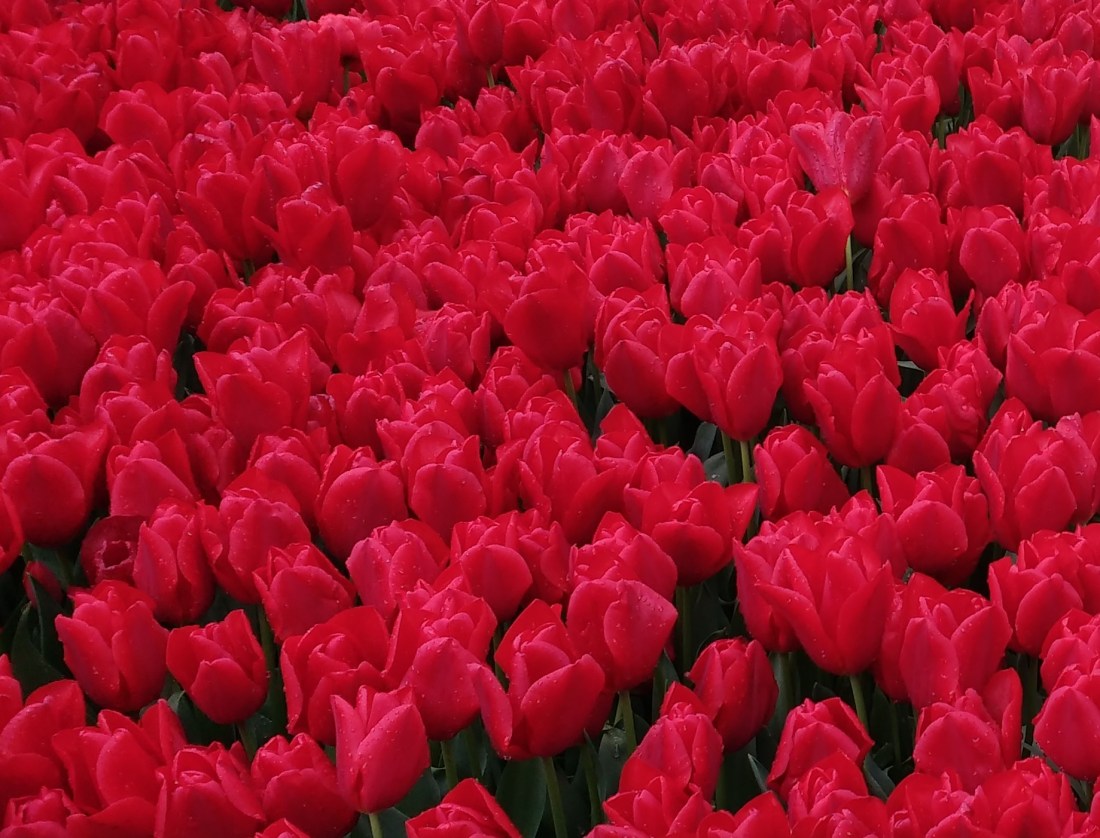
It’s tulip time in Turkey, despite everything. I was incredibly privileged to have experienced this special time last year. Now, the parks that cheered me up to no end with their seas of tulips in every imaginable colour, have been, sadly, officially closed for visitors. Anyway! When the world is back to normal, you should definitely plan a visit to Istanbul at the end of March or beginning of April to enjoy the delights of the tulip season.
The Turks, the Ottomans, the diplomats and the tulips
The Turks are very fond of tulips and claim that the flower, which was supposedly brought from Central Asia to Anatolia via modern-day Iran, has been mentioned in various sources dating to the 12th – 13th century. By the way, did you know that Anatolia means the land of the rising run? The ancient Greeks, who inhabited the islands of the Aegean back in the day looked eastwards in the direction of Anatolia and it seemed to them the sun rose from there; hence the name.
The tulip originally grew as a wild flower. It wasn’t until the 16th century and the times of Suleyman the Magnificent when the tulips began to be cultivated, by no other than sultan’s chief of Islamic law and jurist, Ebussuud Efendi. He selected different types of bulbs and experimented with them. Appreciation of the flower was shown by many all over the Ottoman Empire, resulting in the establishing of the Flower Academy and regularly held tulip contests. The fame of the tulip spread far and wide and reached Europe in the second half of the 16th century, when the ambassador of the Austro-Hungarian Empire, Augier Ghislain de Busbecq, first sent tulip bulbs to Vienna. They caught on and became particularly popular in the Netherlands, and the rest is history.
A divine flower? Symbolism
The Turkish word for tulip, lale originates from Persian and has the same letters as the word Allah. According to the Abjad system, which assigns a numerical value to every letter, the combined value of the letters in the words lale and Allah is the same – 66. Originally, most cultivators of tulips were renowned mystic scholars. They saw in the tulip bulbs, which grow out of a single scape, the unity of all things in God, the one. It is said that the black things inside the flower (forgive my lack of appropriate botanic terms) were apparently associated with blind love, since they cannot be seen from the outside.
The Istanbul tulip
The Istanbul tulip is no ordinary tulip. It has poined petals, unlike other varieties. Another name of the flower is Lale-i Rumi. Rumi was a 13th century Muslim mystic, better known as Melvana, which means master in Persian. He was the one to introduce spinning in a circle as a form of meditation into his teachings, the central idea of which were to purify one’s soul of the negative feelings and desires of the body.
The Istanbul Tulip Foundation and museum
In my many years in Britain, I was amazed to discover that the British have an association about virtually everything, with my personal favorites being The Pork Pie Association and The Apostrophe Protection Society. I’ve always admired this. So, I was really pleased to learn about the Istanbul Tulip Foundation, whose aim is to strengthen the place of the tulip in the Turkish art and culture.
To this end, they have established the Istanbul tulip museum, which is rather small, but most informative. There are quite a few artefacts in the museum (clothes, plates) with tulip ornaments and patterns. The origins of the tulip and the way it grows are explained. There are a number of pictures of various landmarks in Istanbul and elsewhere in Turkey, where architects have incorporated the tulip, giving it a most prominent place among the plethora of other details.
Whilst in the museum, I had an unusual idea. Some of my readers will be familiar with the concept of user-centered web design, or with the concept of student-centered teaching. I thought of a visitor-centered museum, which would consist of a bare room with a single sign: Tulips. They’re everywhere! Go find them! Much as the idea entertained me, I admit it would be next to impossible to implement; still, I acted on it and you aren’t tired of reading, you can read about my findings later.
So, where are these tulips?
Gülhane park
For those short of time, a great place to see the tulips is Gülhane park, right next to Topkapı Palace. Getting there is easy enough: jump on a tram going in the direction of Bacılar or Cevizlibağ and alight at Gülhane. Cross the road and you’re in the park.
Sultanahmet square
Apart from tulips, we all know that Turkey is famous for its carpets. But how about a carpet of tulips? Yes, yes, a carpet of tulips! Last year, there was one on display right next to Hagia Sophia museum and it was amazing. I can’t believe I don’t have a picture of it.
Emirgan park

Emirgan park is probably the best place to see the tulips in all their glory. They are everywhere; seas, rivers of tulips, a delight to the eye. A visit to Emirgan park is likely to be a full-day outing, or half a day at least. The best way to get there is, in my experience, the ferry, which seems to run on weekdays only. You need the Eminönu – Rumeli Kavaği line. Catch the 11 am from Eminönü (11:15 from Beşiktaş); it will take 50 / 35 minutes respectively to get to the Emirgan pier. The park is a short walk from there.
There is a spending structure in the park, which is now a cafeteria / restaurant, the Yellow Pavilion, Sarı Köşk. Absolutely worth seeing. Pop in inside, too and have a good look around. There are a couple of other pavilions, notably the White Pavilion, which is used as a restaurant and a wedding venue. The park is a popular place for wedding pictures; to congratulate the happy couples, say Tebrikler! (Turkish for Congratulations!)
The Tulip Museum is also located in Emirgan park and at the time when I visited, the ticket price was more than reasonable.
Tulips. They’re everywhere!
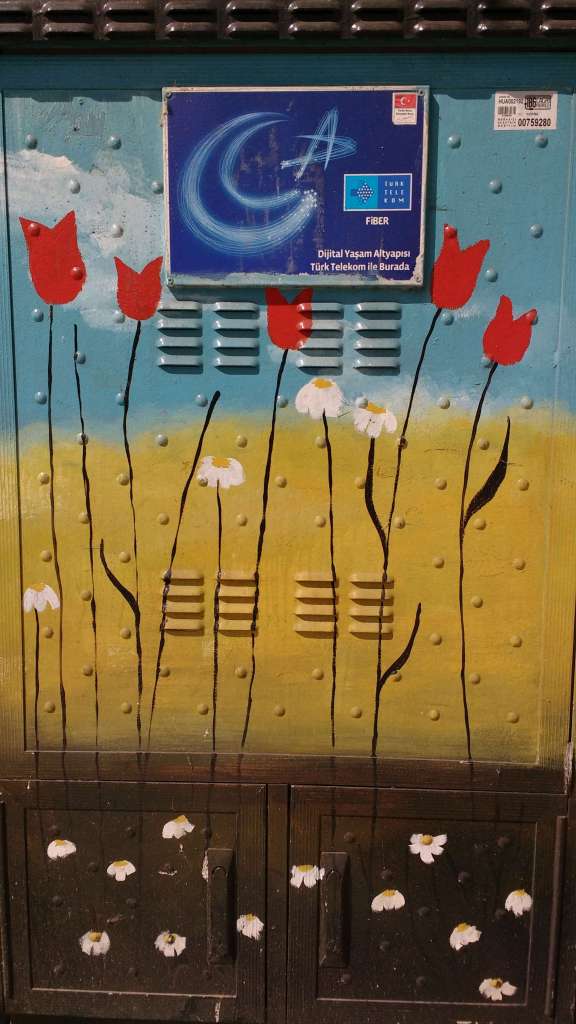
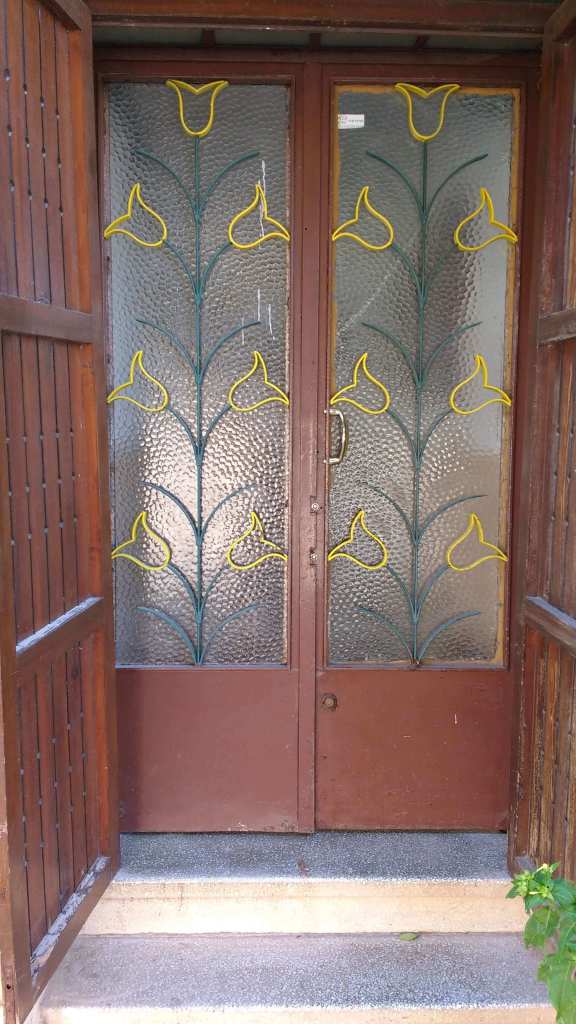
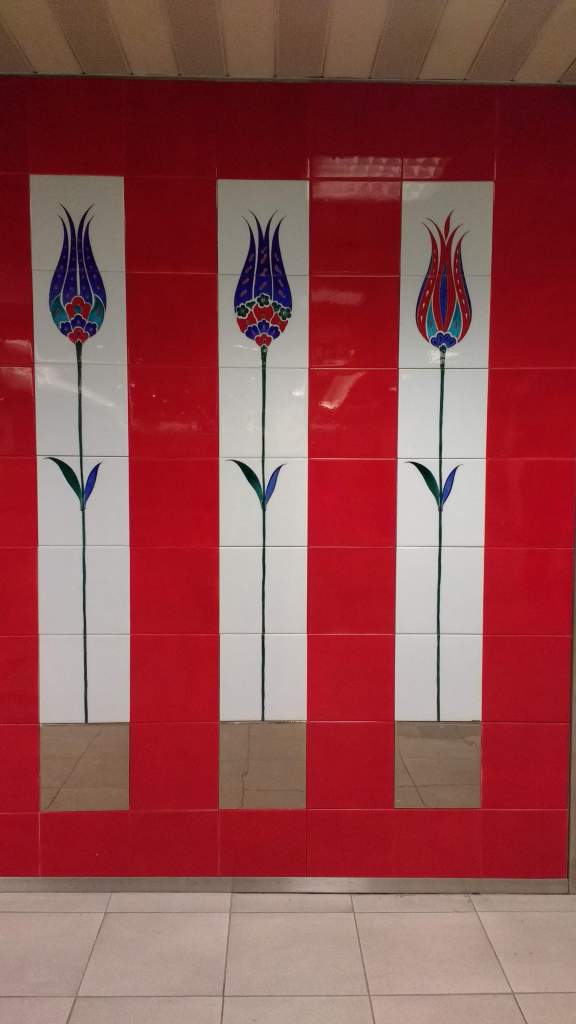
Tulip-hunting in the city was no hardship. As a matter of fact, the tulips themselves found me, with very little effort on my part. They were in metro stations; they appeared under the guise of telephone booths that no-one uses anymore; as graffiti on electricity substations; as details on wrought iron doors.
Spring, renewal and hope
Let the tulips remind us of the imminent arrival of spring, and with it, the arrival of hope, of renewal, of better times ahead of us. As we look out of our windows, let’s hope that next spring is very, very different from this one: a spring of joy, a spring of appreciation, a spring full of the beauty of life.


